
Key takeaways
- Look uphill from the stain. Water can travel along the underlay or a timber before it appears inside.
- Notice the weather. Wind from one direction and rain that lasts for hours give a roofer different places to start.
- Ask which parts can stay. The condition of the covering and the timber beneath it helps decide the scope of the repair.
How water gets behind the join
Where the bottom row of tiles drains onto an extension, rain should flow over the flat covering towards a gutter or outlet. The sheet beneath the tiles, called the underlay, also needs a way to drain. If it finishes behind the waterproof covering, rain can reach the timber while the tiles still look tidy from outside.
1Rain drains away. The solid blue line follows the tile faces and flat covering into the gutter.
2Water gets behind the join. The dashed line follows one possible route to a ceiling stain further inside.
What happens when it leaks?
The weather and timing can help narrow the search. Pick the clue that sounds most like yours to see what a roofer would check.
What the join looks like in Whalley
These two photos from the same Whalley job show the part you can see from outside. The wider view puts the strip of tiles in context. In the close-up, the line between the two coverings is clear, but the overlap beneath the tiles is hidden. On a leak visit, that’s one reason a photo alone can’t settle what needs repairing.
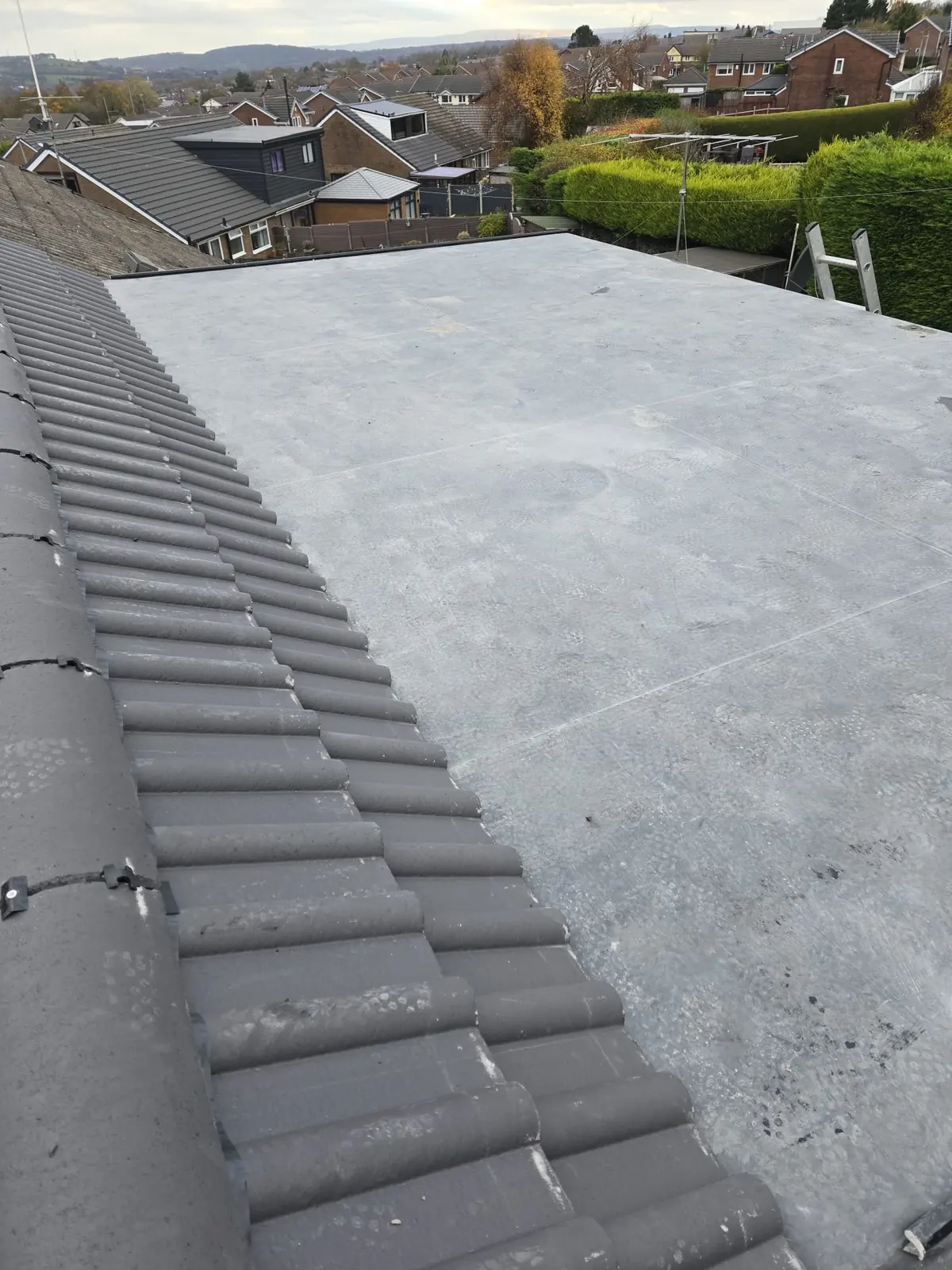
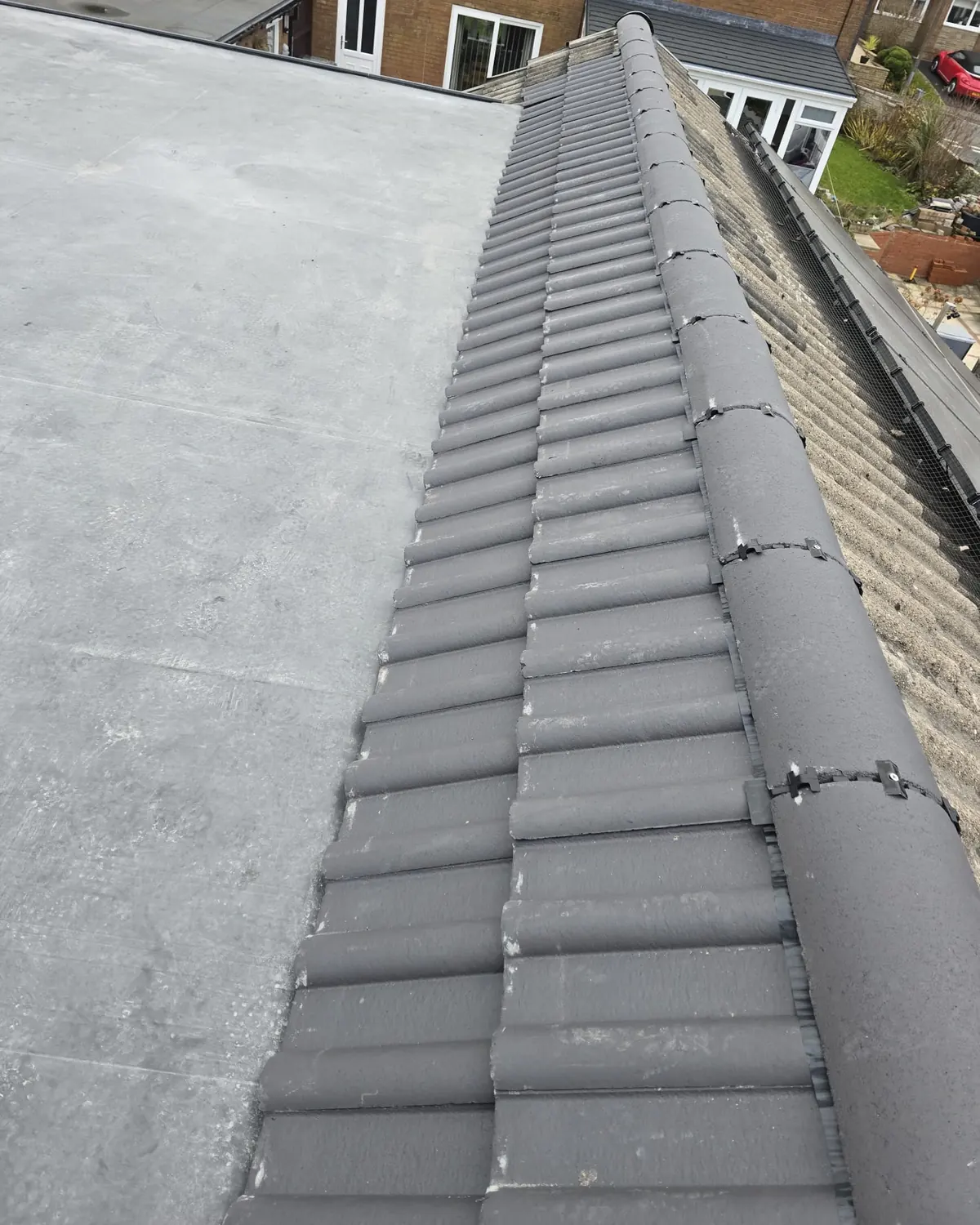
Open the Whalley project gallery for the full-size photos. Other extensions have tiles that slope away from the flat roof or a join that runs alongside the slope. A roofer checks which way each surface drains before deciding how to weatherproof the edge.
Can just the join be repaired?
Yes, if the leak can be traced to one detail and the surrounding roof is sound. The roofer needs sound material on both sides of an open joint to make a lasting repair.
If you’re comparing a roof repair with renewing a larger area of flat roofing, ask the roofer to show you where the water gets in and which part of the quote addresses it.
Questions about extension roof leaks
How do you find a flat roof leak when there’s no visible hole?
Start indoors. Note where the mark first appeared and take a photo when it changes. From ground level, see which part of the tiled slope lies above it. A roofer can then trace the tile laps, flashing, seams and outlet. A small section may need lifting to see where the waterproof layers meet.
How much does it cost to fix a leak at a roof junction?
Replacing one accessible tile is a different job from lifting several rows to remake the overlap. Access equipment, the length of the damaged join and any wet or soft decking affect the quote. Ask which work is included and how any hidden deck damage would be priced.
Will roof sealant stop water coming in at the join?
Sealant may temporarily close a gap on the surface. It can’t put a slipped tile back in place or restore an overlap that lets water run behind the covering. Tell the roofer which products have already been used so they can check what will bond to the existing roof.
Does home insurance cover a leaking flat roof?
It depends on the policy and what caused the damage. Buildings insurance commonly covers storm damage. A joint that has gradually worn out is usually treated differently. Photograph the indoor damage and contact your insurer if you think you may claim. The Financial Ombudsman explains how storm damage claims are assessed.
What to send before a visit
An indoor photo of the stain and your postcode are a good start. Add a view of the extension from the ground if you can see it safely. Leave ladders and roof access to the roofer.
You can send Mike the details or use our roofing quote checklist.